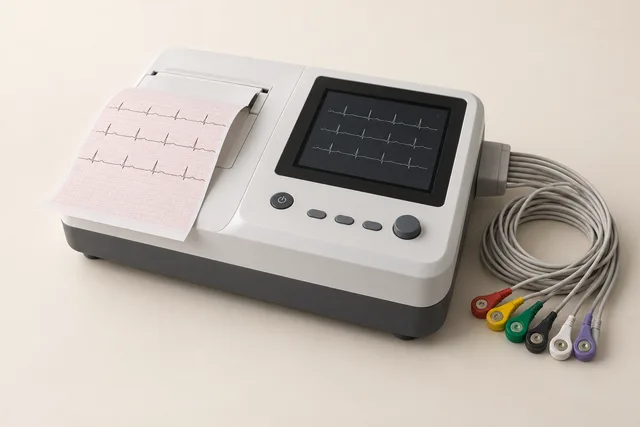
What an ECG can tell us
An ECG records electrical signals from the heart. It can help assess rhythm and support the evaluation of symptoms, but the result is interpreted alongside your history and other findings.
What happens at the test
Small adhesive electrodes are placed on the skin and connected to the machine. You lie still while the recording is taken. A resting ECG does not send electricity into your body.
Preparing for your ECG
Wear clothing that makes the chest accessible and avoid applying lotions there before the test. Let the team know if you would like a chaperone.
Understanding your result
A resting recording captures a short period of time. Intermittent symptoms may need longer monitoring. Ask when the result will be discussed and whether another test is recommended.
Discuss your options
Bring your previous reports and medicine list to a consultation. Ask how this test or procedure would help in your situation, what alternatives are available and what follow-up you may need.
General patient information, prepared from practice information and the references below. It does not replace a consultation, diagnosis or your hospital’s instructions.
New or severe chest pain, severe breathing difficulty or collapse needs immediate emergency care. Call 112 in India. Do not wait for an appointment or a message reply. Do not drive yourself.